Curious about 'What Is a Block Retaining Wall?' Learn about the types, benefits, and installation process for these durable landscaping structures. Conta...
Are Pavers Better Than Stamped Concrete?
 When planning a new patio, driveway, or walkway, one of the most common questions homeowners face is: are pavers better than stamped concrete? Both options provide durable and attractive surfaces, but they possess distinct differences in cost, maintenance, aesthetics, and long-term value. Consequently, understanding these variations is crucial for making an informed decision that aligns with your property’s needs and your budget. This comprehensive guide will break down the key factors to help you choose the best material for your next outdoor project.
What Are Interlocking Pavers?
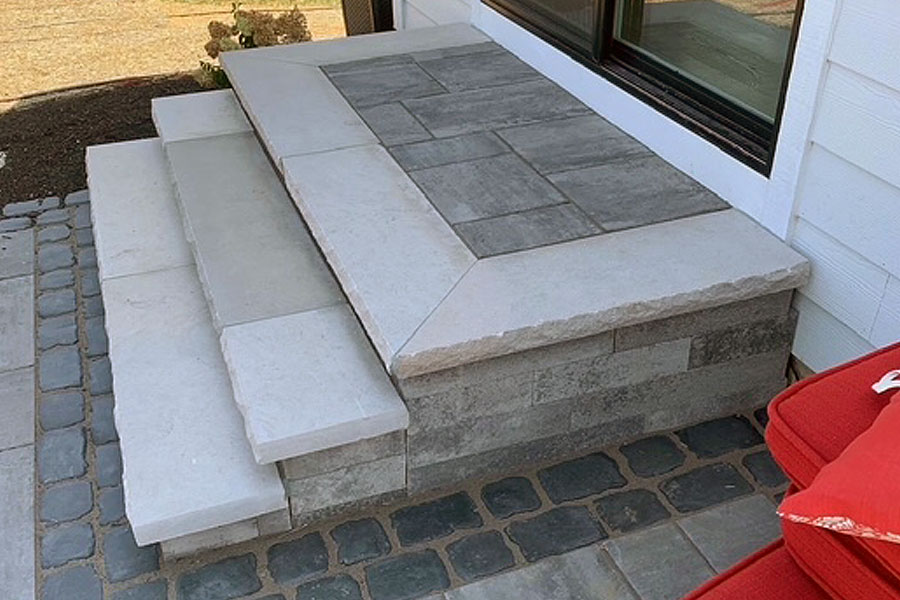
Interlocking pavers are individual units made from concrete, clay, or natural stone. They are laid on a compacted base of sand and gravel, and their joints are filled with sand to lock them into place without mortar. This method creates a flexible yet incredibly strong pavement system. Furthermore, the variety in shapes, colors, and textures allows for significant design creativity. To learn more, you can explore what a paver patio entails in detail.
Advantages of Pavers:
- Superior Durability: Pavers are manufactured to be extremely dense and can withstand heavy loads. Importantly, their flexible, interlocking system allows for minor ground shifts without cracking.
- Easy Repairs: If a paver becomes stained or damaged, you can simply remove and replace the individual unit. This makes repairs seamless and cost-effective compared to large-scale concrete work.
- Immediate Use: Once installed, a paver surface is ready for immediate use. There is no curing time required.
- Permeability: Certain paver systems are designed to be permeable, allowing water to drain through the joints. This can help manage stormwater runoff effectively.
What Is Stamped Concrete?
Stamped concrete, on the other hand, is a single, continuous slab of poured concrete that is textured or imprinted with a pattern. While the concrete is still wet, large stamps are used to press patterns into the surface that can mimic brick, slate, flagstone, or even wood. Color can be mixed into the concrete or applied to the surface. The result is a solid, seamless surface with a high-end look, often for a lower initial cost than the materials it imitates.
Advantages of Stamped Concrete:
- Lower Initial Cost: Generally, the material and labor costs for a stamped concrete installation are lower than for a high-quality paver project.
- Design Versatility: The combination of patterns and colors is nearly limitless, offering a wide range of customization. Homeowners can find many endless stamped concrete patio ideas to suit their style.
- Faster Installation: Pouring and stamping a single slab is often a quicker process than individually laying hundreds of pavers.
Cost Comparison: Pavers vs. Stamped Concrete
Initially, stamped concrete often appears to be the more budget-friendly option. However, the long-term cost of ownership can shift the balance. While pavers may have a higher upfront installation cost, their repair costs are significantly lower. Replacing a few pavers is a minor expense, whereas repairing a large crack in a stamped concrete slab can be complex and costly. In fact, perfectly color-matching a patch on aged stamped concrete is nearly impossible, leading to visible repair marks. Therefore, you must consider both initial and lifecycle costs.
Durability and Maintenance Showdown
Both materials are durable, but they respond differently to stress and weather. Stamped concrete is strong but rigid. Consequently, it is susceptible to cracking due to ground settlement or freeze-thaw cycles. Pavers, with their numerous joints, create a flexible surface that can adapt to movement, making them highly resistant to cracking. For maintenance, stamped concrete requires periodic resealing (every 2-3 years) to protect its color and surface. Pavers may require occasional weeding in the joints and topping up the joint sand, but their color is integral and won’t fade from wear.
What Happens When Damage Occurs?
This is where the two materials diverge significantly. A crack in a stamped concrete patio or driveway is a major issue. Repair often involves patching, which rarely matches the original look. In severe cases, the entire slab may need replacement. In contrast, if a paver is damaged, the solution is simple. You can lift out the single paver and replace it. This is a key reason why many ask, are pavers better than stamped concrete? For those prioritizing easy, long-term maintenance, pavers offer a clear advantage. If you notice cracks in any concrete surface, it’s wise to seek professional concrete repair services promptly.
Key Factors to Consider: Are Pavers Better Than Stamped Concrete?
When you’re weighing your options, the answer to ‘are pavers better than stamped concrete?‘ truly depends on your specific priorities. If your primary concern is the lowest possible initial investment and you love a specific seamless pattern, stamped concrete might be your choice. However, if you are planning for the long term and value ease of repair, superior durability in freeze-thaw climates, and a non-slip surface, pavers are often the superior investment. For example, the ability to easily access underground utilities by simply lifting and relaying pavers is a significant benefit that stamped concrete cannot offer.
Final Thoughts: Making Your Decision
Ultimately, the choice between pavers and stamped concrete is a balance of aesthetics, budget, and long-term performance expectations. Stamped concrete provides a beautiful, customizable, and seamless surface with a lower upfront cost. Pavers, in contrast, offer unparalleled durability, easy repairs, and a classic look that holds its value over time. For many homeowners, the long-term reliability and low-stress maintenance of pavers make them the better choice. Before making a final decision, consider your climate, the intended use of the surface, and how long you plan to stay in your home. Ready to discuss your project? Request a professional quote today to get expert advice tailored to your needs.
Related Posts